
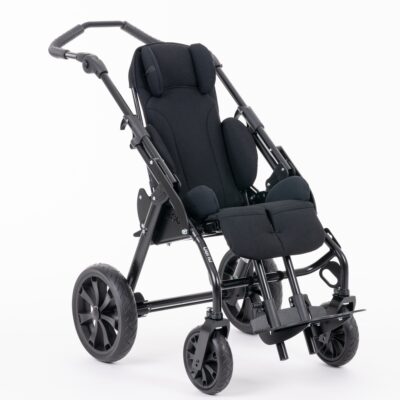

| BINGO TEEN | |
| Seat width | 28 – 40 cm |
| Seat depth | 36 – 48 cm |
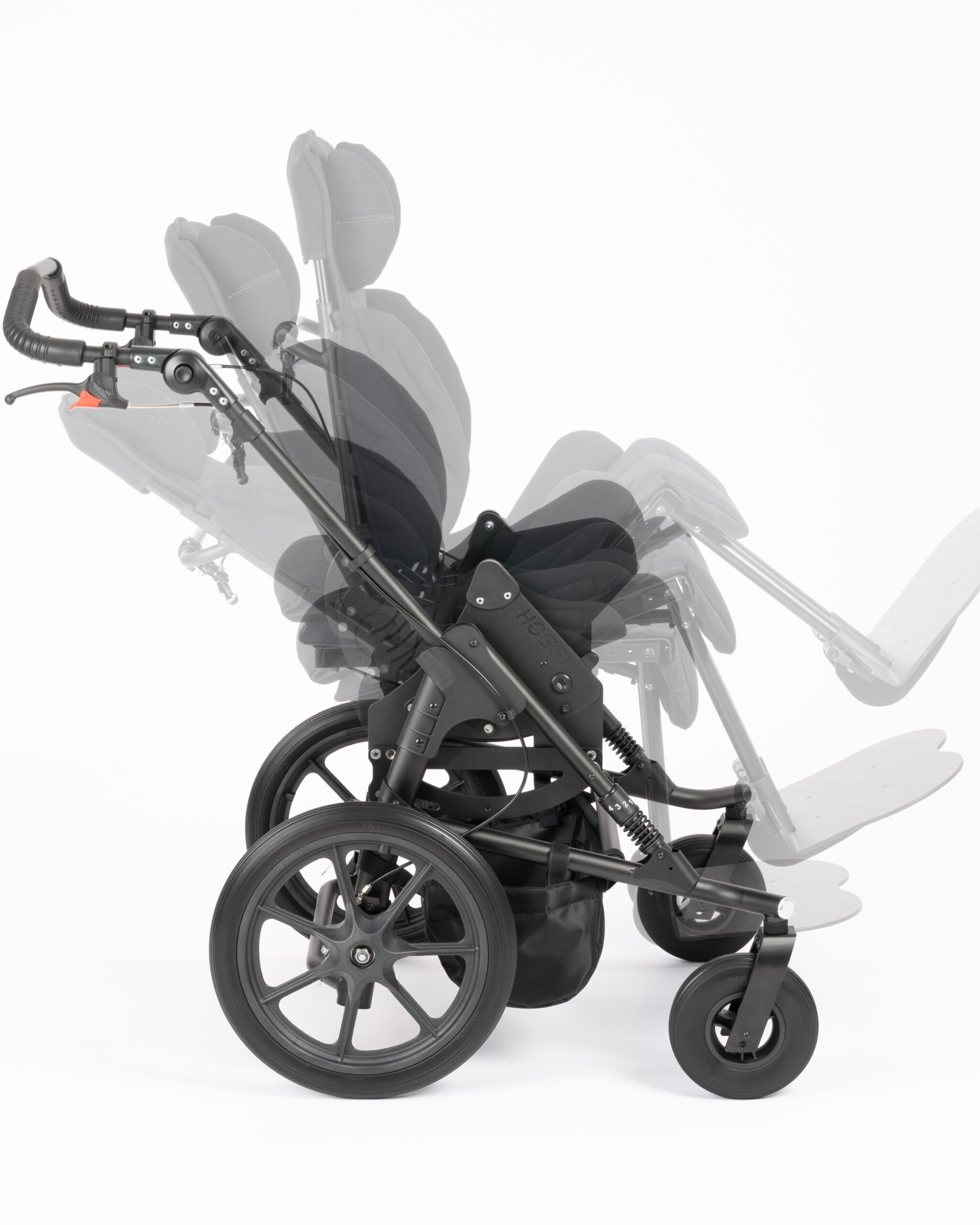
| Tilt in space seat unit | |
| Seat unit front facing | 45° |
| Seat unit rear facing | 45° |
| Back height | 65 – 85 cm |
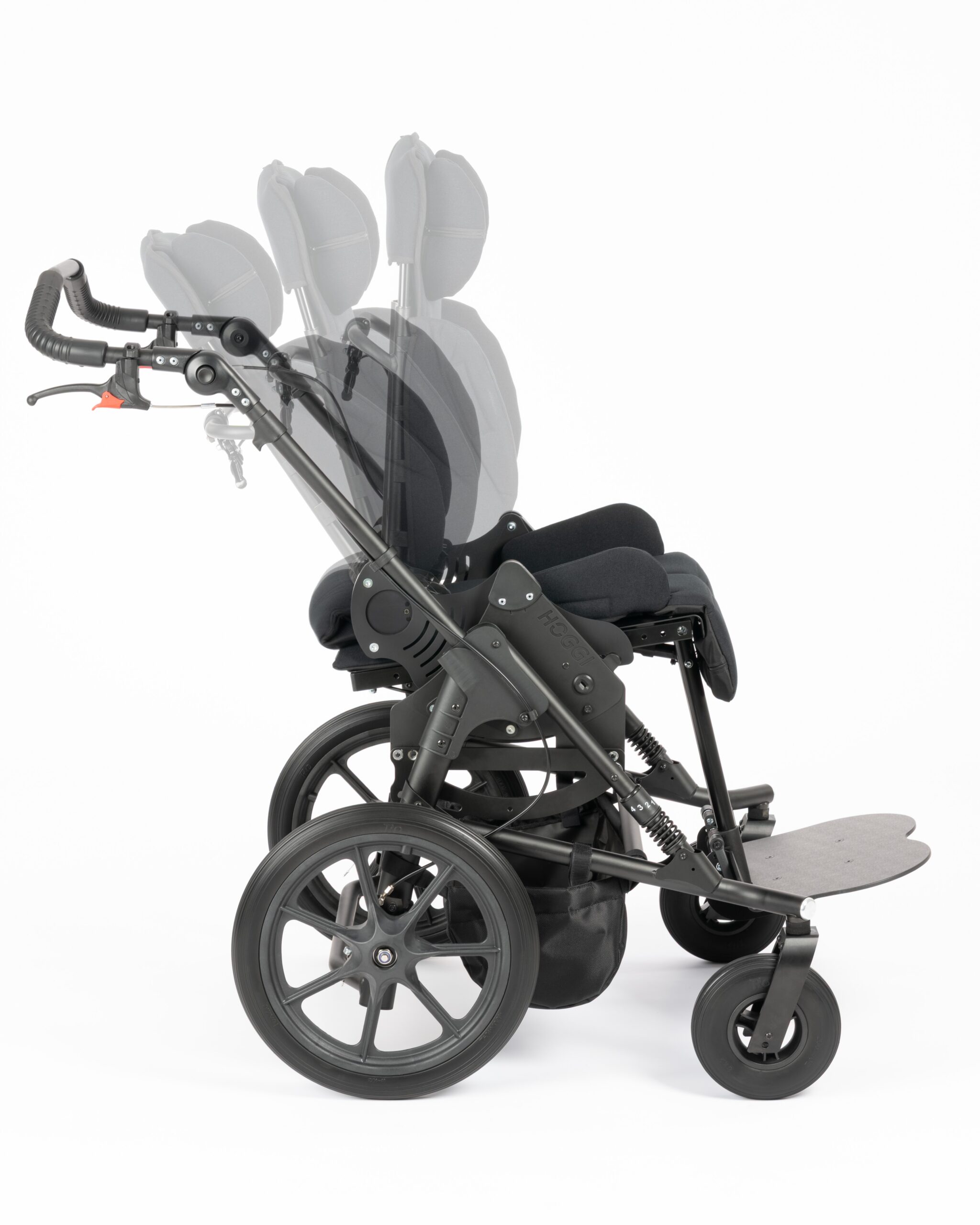
| Recline | 78° – 120° |
| Lower leg length | 20 – 44 cm |
| Height of push bar | 87 – 119 cm |
| Overall width | 70 cm |
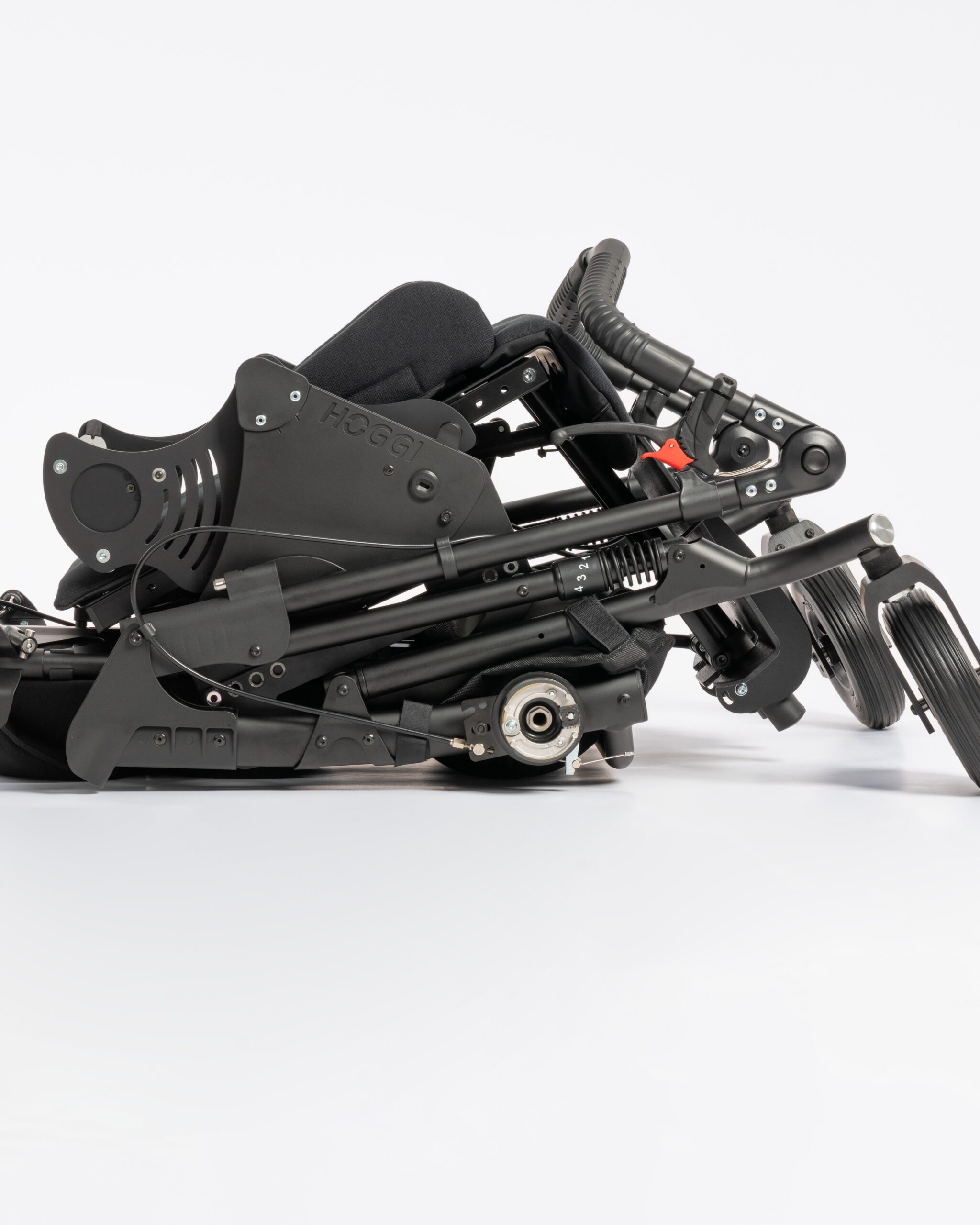
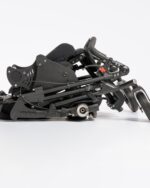
| Folding size (L x W x H) | 80 x 70 x 70 cm |
| Weight limit | 75 kg |
| BINGO TEEN is crash tested successfully according to ISO 7176-19 | |

Description
Additional information
| Brand |
HOGGI |
|---|
Features
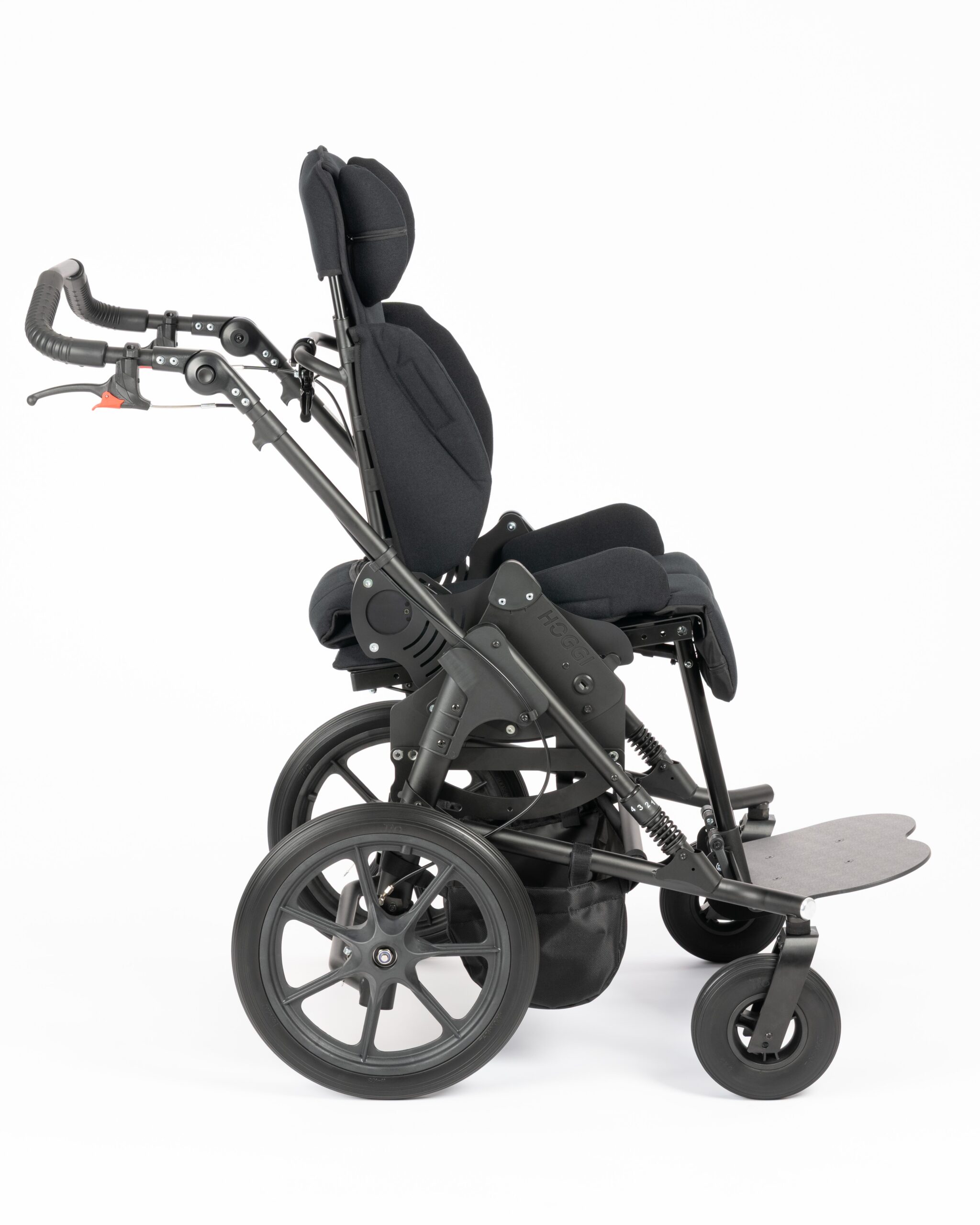
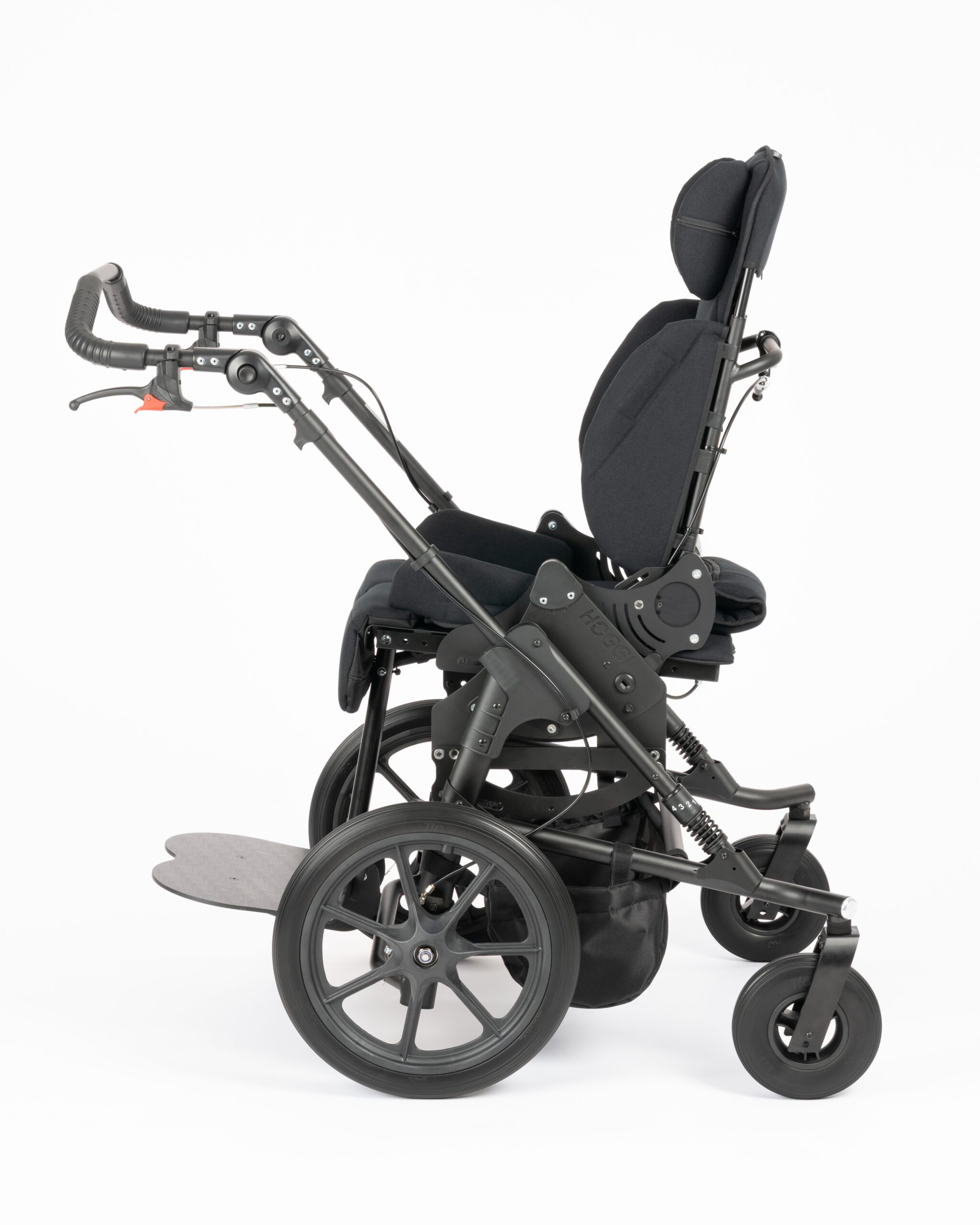
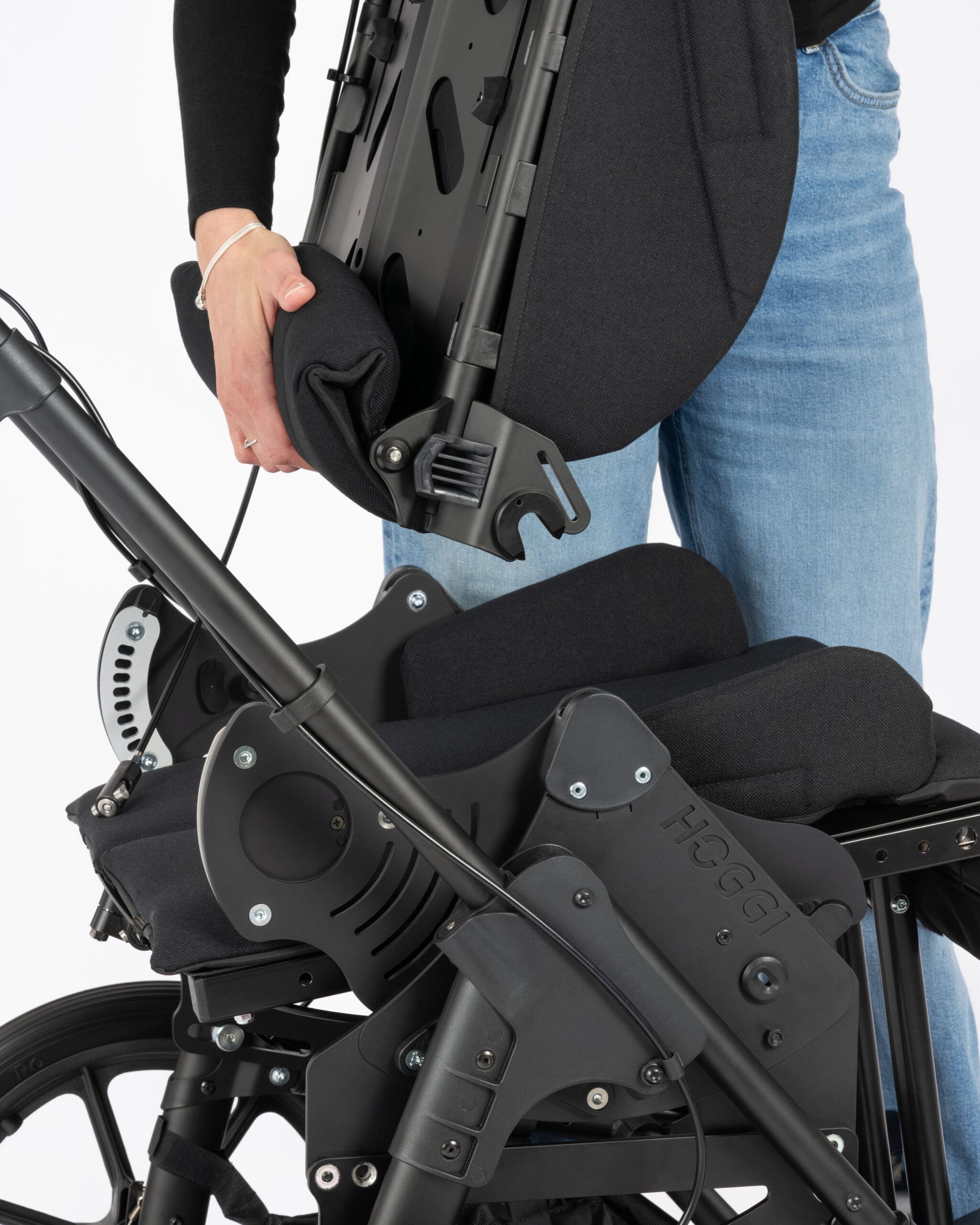
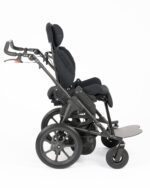
The BINGO TEEN is a rehab pushchair that, thanks to its versatility and exceptional adaptability as the child grows, can be used almost universally for nearly any medical condition requiring a seating solution. It can accompany the user throughout their growth phase and can also be quickly adapted to new situations at any time.
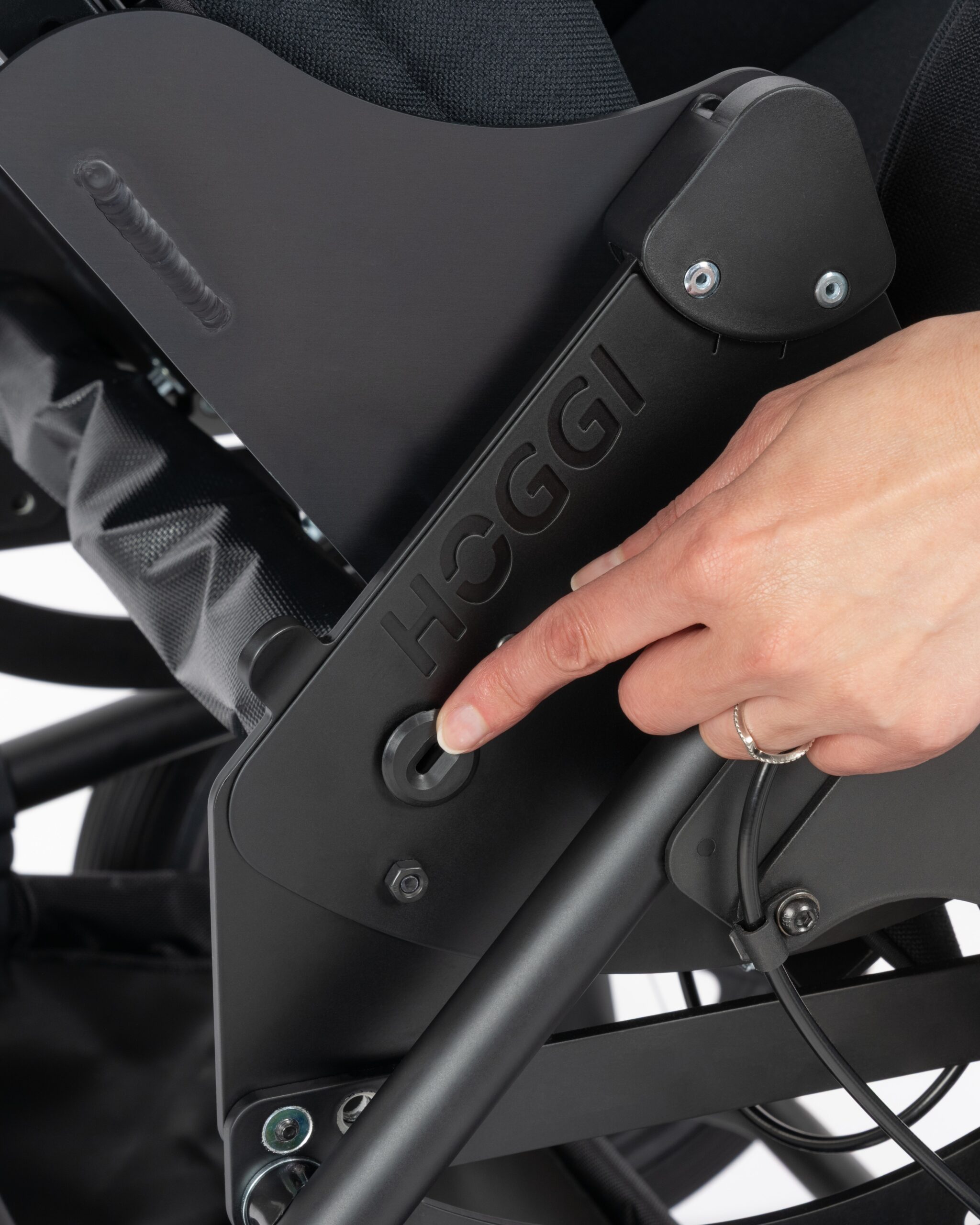
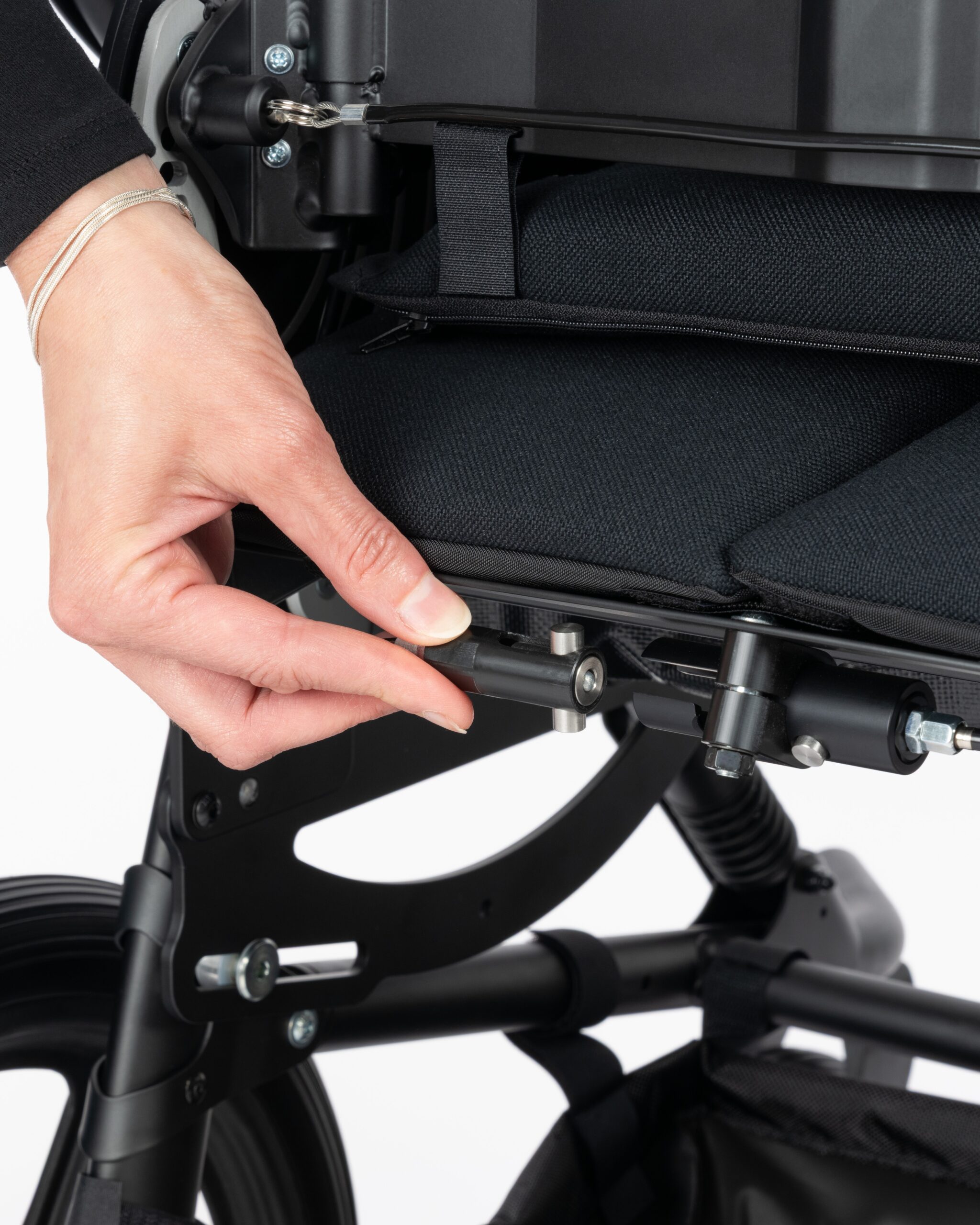
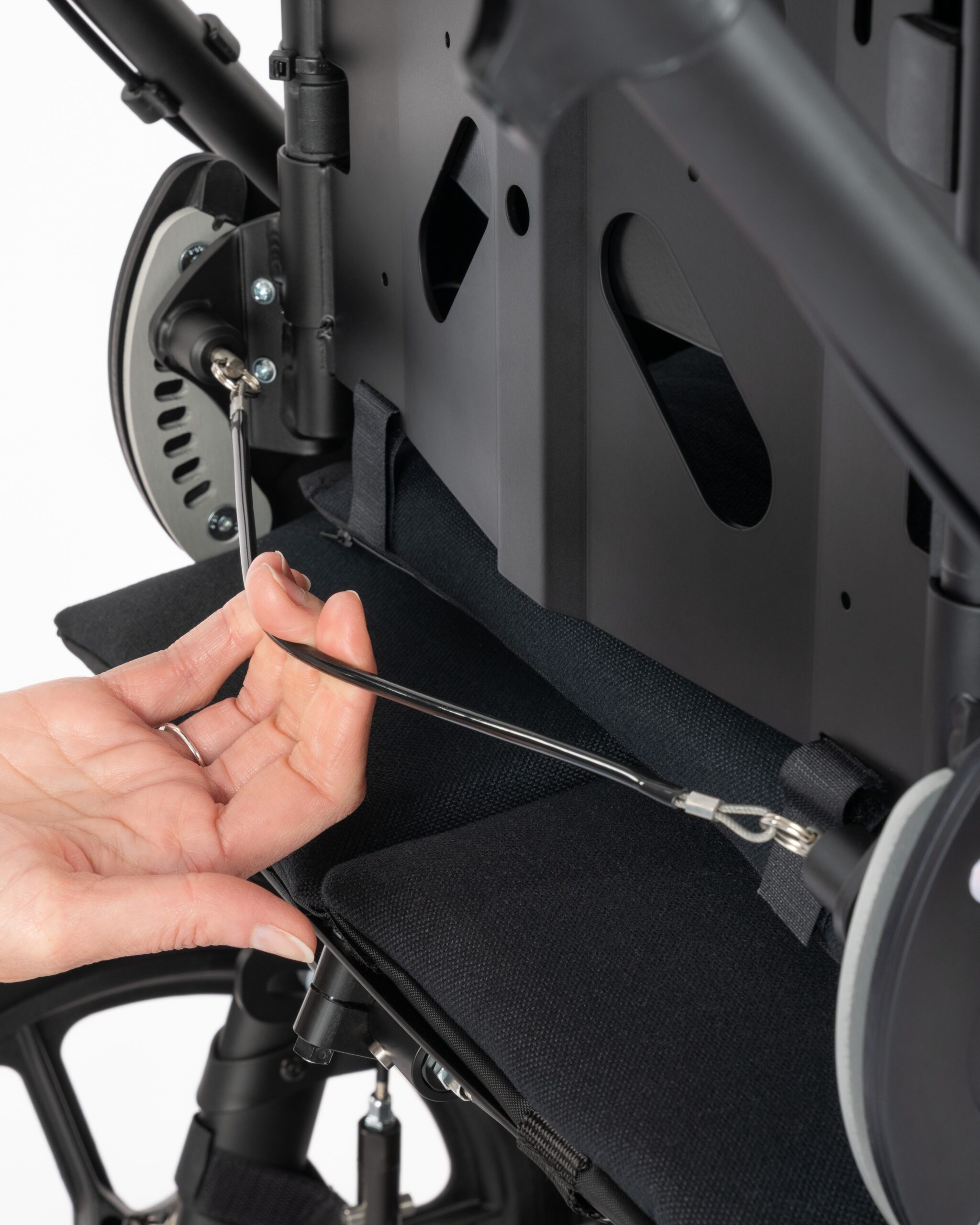
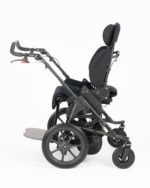
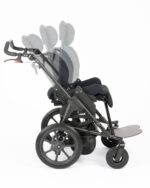
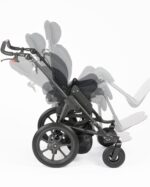
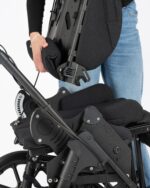
Thanks to the 45° seat tilt and the independent backrest recline of up to 180°, virtually any conceivable positioning is possible. Specifications may vary by model; exact details can be found in the technical data. A wide range of accessories, such as modular padding or harnessing, allows for fully customized support depending on specific needs.
Depending on the clinical condition, the tilt function is an indispensable feature, both for therapeutic purposes and for everyday use.
Children who are unable to position themselves sufficiently independently require the special support provided by the adjustable seating unit. This is because the seating position affects not only bodily functions and structures, but also the user’s activity and participation.
Key points to note here:
- The mechanism allows for switching between the three physiological seating positions – active, neutral, and passive – ensuring that body weight is distributed across a wide surface area, thereby helping to prevent pressure ulcers.
- Furthermore, this constant variation alternately engages and relieves all muscle groups. This regulation of muscle tone can, on the one hand, prevent spasms and, on the other, activate weak muscle groups. For example, a neutral or slightly negative seating angle emphasizes the dorsal (back) muscle chains, whereas a positive seating angle or a strongly tilted position tends to engage the ventral (abdominal) muscles.
- A seating angle of >90° can have a positive effect on leg extension spasticity.
- A seat angle of <90°, on the other hand, tends to have a positive effect on a general extension pattern of the trunk.
- A negative seat tilt facilitates transfers and can thus reduce spasms.
- A change in spatial position stimulates the cardiovascular system and metabolism and enhances perception by altering the field of vision.
- By adjusting the pelvic angle and thereby stimulating the core muscles, the spine can be stabilized, helping to prevent or at least support cases of scoliosis.
- The needs-based addition of lateral pads or harnesses promotes a physiologically and anatomically correct sitting position. The trunk stability achieved in this way leads to optimal development of the child’s hand-eye coordination and to the acquisition of physiological movement patterns in the upper extremities.
Download Brochure/Specification
Visit our Resources page to download Brochure and Specifications